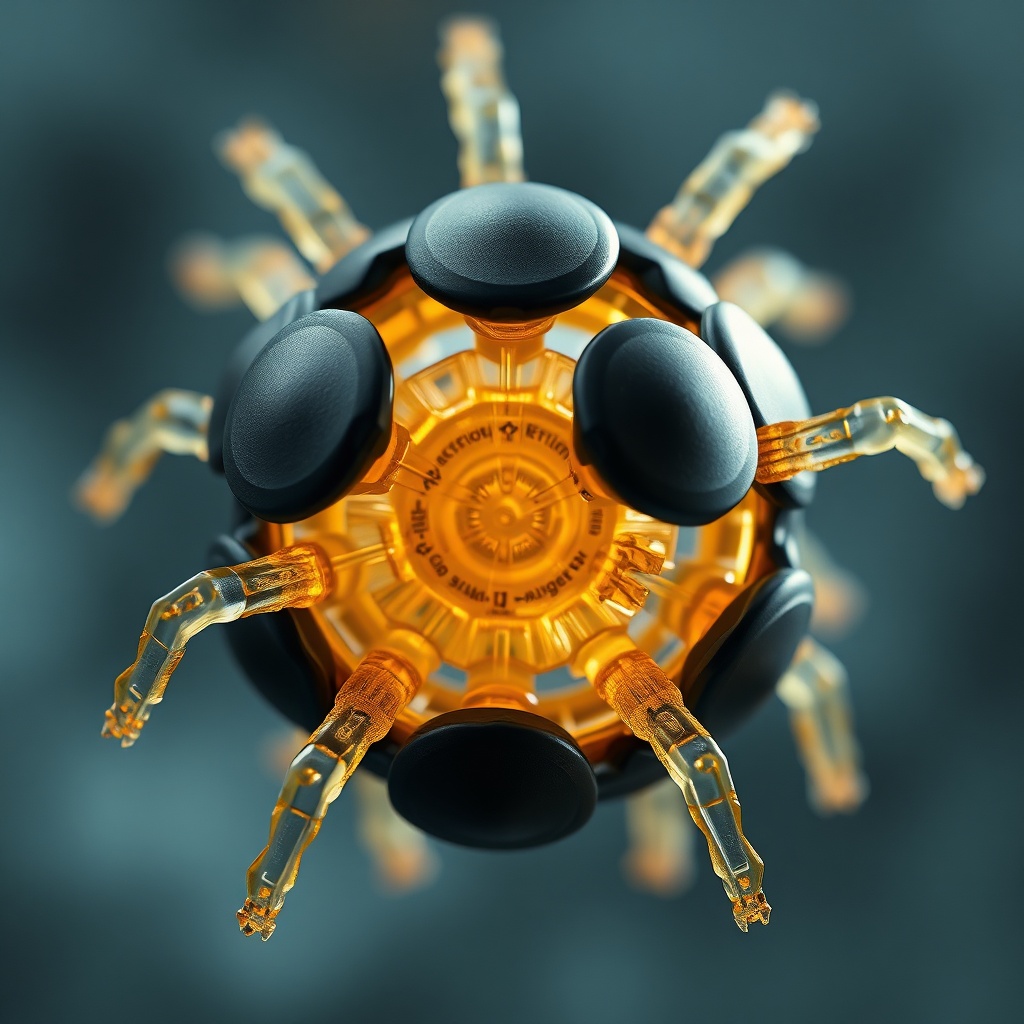
Imagine you’re a Site Reliability Engineer for the most complex, distributed system ever built: the human body. For the last 80 years, your primary tool for mitigating "bacterial downtime" has been a set of broad-spectrum legacy scripts called antibiotics. They worked brilliantly at first, but they have a fatal architectural flaw: they are "dumb" tools. They don't have an IP filter. When you run rm -rf /path/to/infection, they accidentally wipe out your entire microbiome/ directory, leading to cascading system failures.
Worse yet, the "bugs" have evolved. They’ve developed sophisticated firewalls, efflux pumps (load balancers for toxins), and horizontal gene transfer protocols that share "exploit patches" across different bacterial species. We are officially entering the era of the Post-Antibiotic Apocalypse, where a simple syntax error in a surgical procedure could lead to a total system crash.
While the world has spent the last decade obsessed with CRISPR-Cas9 as the ultimate "find and replace" tool for genomic code, the engineering community is starting to realize that CRISPR alone isn't enough. It’s a great library, but it needs a delivery vector—a way to target specific "servers" (bacteria) without affecting the rest of the network.
Enter the Engineered Bacteriophage.
In this deep dive, we’re going to explore how we are moving beyond simple gene editing into the realm of Synthetic Virology. We’re talking about compiling custom biological executables, re-engineering tail-fiber hardware for precise targeting, and building a CI/CD pipeline for the most effective predators on the planet.
The Legacy Debt: Why CRISPR-Cas9 is Only Version 1.0
To understand where we’re going, we have to look at why CRISPR-Cas9, despite the hype, hasn't solved antibiotic resistance yet.
CRISPR-Cas9 is essentially a guided endonuclease—a pair of molecular scissors. In the context of antibacterial therapy, the goal is to deliver CRISPR into a resistant bacterium, have it target a resistance gene (like NDM-1 or KPC), and make a double-stranded break, effectively "bricking" the cell.
The bottleneck isn't the edit; it's the deployment.
How do you get the CRISPR payload into 100% of the target bacteria in a localized infection? Chemical transfection is too inefficient. Electroporation in a living human is... problematic. This is where bacteriophages—viruses that exclusively infect bacteria—come in. They are nature’s specialized delivery drones.
But natural phages have their own "technical debt":
- Narrow Host Range: A natural phage might only infect a single strain of E. coli, ignoring the 50 other strains causing the problem.
- Lysogenic Conversion: Some phages don't kill the host; they integrate into its "source code" (the genome), potentially making the bacteria more dangerous.
- Resistance to the Predator: Bacteria can evolve resistance to phages just as they do to antibiotics.
To solve this, we don't just need a better tool; we need to re-architect the predator.
The Tech Stack: Synthetic Phage Engineering
If we view a bacteriophage as a hardware/software stack, we can begin to apply modern engineering principles to optimize its performance.
1. The Kernel: Synthetic Genome Synthesis
In the old days of microbiology, if you wanted a phage with a specific property, you had to go to a sewage plant and "grep" for it in the wild. Today, we are moving toward de novo synthesis.
Using techniques like Gibson Assembly or Yeast-based Transformation-Associated Recombination (TAR) cloning, we can assemble a phage genome from scratch using synthetic DNA fragments. This allows us to:
- Strip out "junk" code or dangerous virulence factors.
- Insert "payloads" like CRISPR arrays or antimicrobial peptides.
- Optimize the "codon usage" to ensure the phage replicates at maximum speed within the host's "runtime environment."
2. The Physical Layer: Tail-Fiber Engineering
The "tail fibers" of a phage are its hardware interface—the docking ports that recognize specific receptors (like LPS or OmpC) on the bacterial cell wall. If the tail fiber doesn't match the receptor, the "handshake" fails, and the payload is never delivered.
Engineers are now using domain swapping to create chimeric phages. By taking the "scaffold" of a well-understood phage (like T7) and swapping its tail-fiber genes with those from a phage that targets a different strain (like Pseudomonas), we can effectively "re-route" the virus to a new target.
# Conceptual representation of a Tail-Fiber Swap CI Pipeline
def build_engineered_phage(scaffold_genome, target_receptor_data):
    # Analyze the target bacterial surface proteins
    target_epitope = target_receptor_data.get_primary_binding_site()

    # Query a database of known tail-fiber domains
    matching_fiber = bio_database.search_fiber_library(target_epitope)

    # Perform the "edit" at the genomic level
    new_genome = scaffold_genome.replace_sequence(
        location="gp17_tail_fiber",
        replacement=matching_fiber
    )

    # Compile the genome into a physical phage via a "bootstrapping" cell line
    phage_particle = synthetic_lab.boot(new_genome)

    return phage_particle
3. The Payload: Beyond Simple Lysis
While natural phages kill by bursting the cell (lysis), engineered phages can carry out more complex "logic."
- Sensitizers: The phage delivers a gene that makes the bacteria susceptible to an antibiotic it was previously resistant to.
- Biofilm Degraders: Bacteria often live in "biofilms"—slimy fortresses that antibiotics can't penetrate. We can engineer phages to express depolymerases, enzymes that act like biological "SQL injection" attacks, dissolving the biofilm from the inside out.
- Metabolic Disruptors: Overexpressing specific proteins that exhaust the host's ATP, causing a "denial of service" (DoS) at the cellular level.
Architecture: Building a "Phage-as-a-Platform"
In a premium engineering environment, we don't build one-off scripts; we build platforms. The future of antibacterial therapy is a modular phage platform.
The Control Plane: Bioinformatics & ML
The biggest challenge in phage therapy is the "Matching Problem." There are an estimated $10^{31}$ phages on Earth. Finding the right one for a specific patient's infection is a massive search-space problem.
Leading labs are now using Machine Learning (ML) to predict host-phage interactions. By training models on massive datasets of bacterial genomes and phage tail-fiber sequences, we can predict—with high confidence—which engineered phage "binary" will successfully execute on a given bacterial "OS."
This involves:
- Metagenomic Sequencing: Fast sequencing of the patient's infection.
- Feature Extraction: Identifying the specific O-antigens and surface proteins of the pathogen.
- In Silico Simulation: Running billions of simulated "docking" events to find the optimal phage configuration.
The Data Plane: The Bootstrapping Process
Once we have the digital design of the phage, we need to "print" it. This is the Cell-Free Protein Synthesis (CFPS) layer. Instead of needing complex living "factory" cells, we can use a "test-tube" environment containing all the necessary cellular machinery (ribosomes, tRNAs, polymerases) to transcribe and translate our synthetic DNA into functional viral particles.
This is the biological equivalent of a Docker container. It's a controlled, reproducible environment that ensures the output matches the spec every single time.
Overcoming the "Bacterial Firewall" (Defense Evasion)
Bacteria have spent billions of years evolving "security software" to stop phages. If we’re going to win this arms race, our engineered phages need to bypass these defenses.
1. Evading CRISPR-Cas (The Native Firewall)
Ironically, the very tool we use for gene editing—CRISPR—is actually a bacterial immune system. When a phage injects its DNA, the bacteria’s CRISPR system tries to "hash" it and store it in its library to recognize and cut it later.
To counter this, we engineer phages to carry Anti-CRISPR (Acr) proteins. These are small "exploit" proteins that bind to the bacteria's Cas9 machinery and physically block it from working. It’s essentially a Buffer Overflow for the bacteria's immune system.
2. Preventing Surface Mutation
Bacteria often resist phages by mutating their surface receptors (changing their "IP address"). However, if we engineer phages to target receptors that are essential for the bacteria's survival (like those involved in nutrient uptake), the bacteria faces a "Catch-22." If it mutates the receptor to evade the phage, it loses the ability to eat and dies anyway. This is known as evolutionary steering.
Scaling the Infrastructure: From Lab to "Production"
One of the reasons Netflix and Uber can scale so effectively is their use of automation. In synthetic biology, we call this Biofoundries.
Imagine a warehouse filled with liquid-handling robots, integrated with a cloud-based orchestration layer. You upload a DNA sequence, and the system automatically:
- Orders the oligonucleotides.
- Assembles the genome using high-fidelity polymerases.
- Verifies the sequence via Nanopore sequencing.
- Transfects the DNA into a production host.
- Purifies the resulting phages via chromatography.
This turns "drug discovery" into a CI/CD pipeline. Instead of waiting 10 years for a new antibiotic, we can generate a custom "patch" for a new resistant strain in 48 to 72 hours.
The Compute Challenge
The computational requirements for this are non-trivial. Modeling the folding of a tail-fiber protein or the fluid dynamics of phage-biofilm interaction requires massive GPU clusters. We're talking about petabytes of genomic data and high-resolution structural biology simulations (using tools like AlphaFold 3 or Rosetta).
At this scale, biological engineering becomes a data engineering problem.
The Regulatory Sandbox and Safety
In software, we have staging environments to test code before it hits production. In biology, the "production" environment is a human being. This raises significant safety concerns.
- Host Specificity: How do we ensure our "script" doesn't execute on "good" bacteria (the commensal flora)? By engineering "Logic Gates" into the phage genome. We can design phages that only activate their lethal payload if they detect a specific "environment variable"—like a specific bacterial mRNA sequence.
- The "Kill Switch": To prevent engineered phages from persisting in the environment, we can build in auxotrophy. We design the phage so it requires a specific, non-natural nutrient to replicate. Once the infection is cleared and the doctor stops administering the "key" nutrient, the phage population crashes and is wiped from the system.
Why This is More Than Just Hype
The "CRISPR Hype Train" was largely fueled by its simplicity. It was the first time "editing" felt like "typing." But the engineering community is realizing that editing a cell is different from controlling a population.
Synthetic bacteriophages represent the shift from editing to programming. We are no longer just cutting DNA; we are designing autonomous, self-replicating agents capable of navigating complex biological environments to perform targeted tasks.
Recent Tech Milestone: In 2023, researchers successfully used a "cocktail" of engineered phages to treat a patient with a disseminated Mycobacterium abscessus infection that had resisted all known antibiotics. This wasn't a "discovery"; it was a "build." They took a base phage, optimized its genome for the specific patient's strain, and deployed it. It was a successful "hot-fix" for a human life.
The Roadmap Ahead: Biology as a Service (BaaS)
As we look toward the future, the boundaries between software engineering and biological engineering will continue to blur. We are moving toward a world where:
- The Phage Library is a Git Repo: Open-source repositories of phage "parts" (promoters, tail fibers, anti-CRISPR proteins) will allow labs worldwide to collaborate on "patches."
- Personalized Medicine is a Build Target: When you go to the hospital, they won't give you a generic pill. They will sequence your infection, pull the latest "stable release" of a phage scaffold, and compile a custom therapeutic specifically for your "stack."
- Real-time Monitoring: Engineered phages could act as "sentinels," living in our microbiome and only "activating" (replicating and killing) when they detect a specific pathogen signature, effectively acting as an Active Intrusion Detection System (IDS).
We are moving away from the era of "carpet bombing" bacteria with chemicals and into the era of "precision strikes" with code. The post-antibiotic era doesn't have to be a dark age; it can be the era of the most sophisticated engineering we've ever attempted.
The "bugs" are evolving, but so is our ability to debug them. It’s time to push to production.