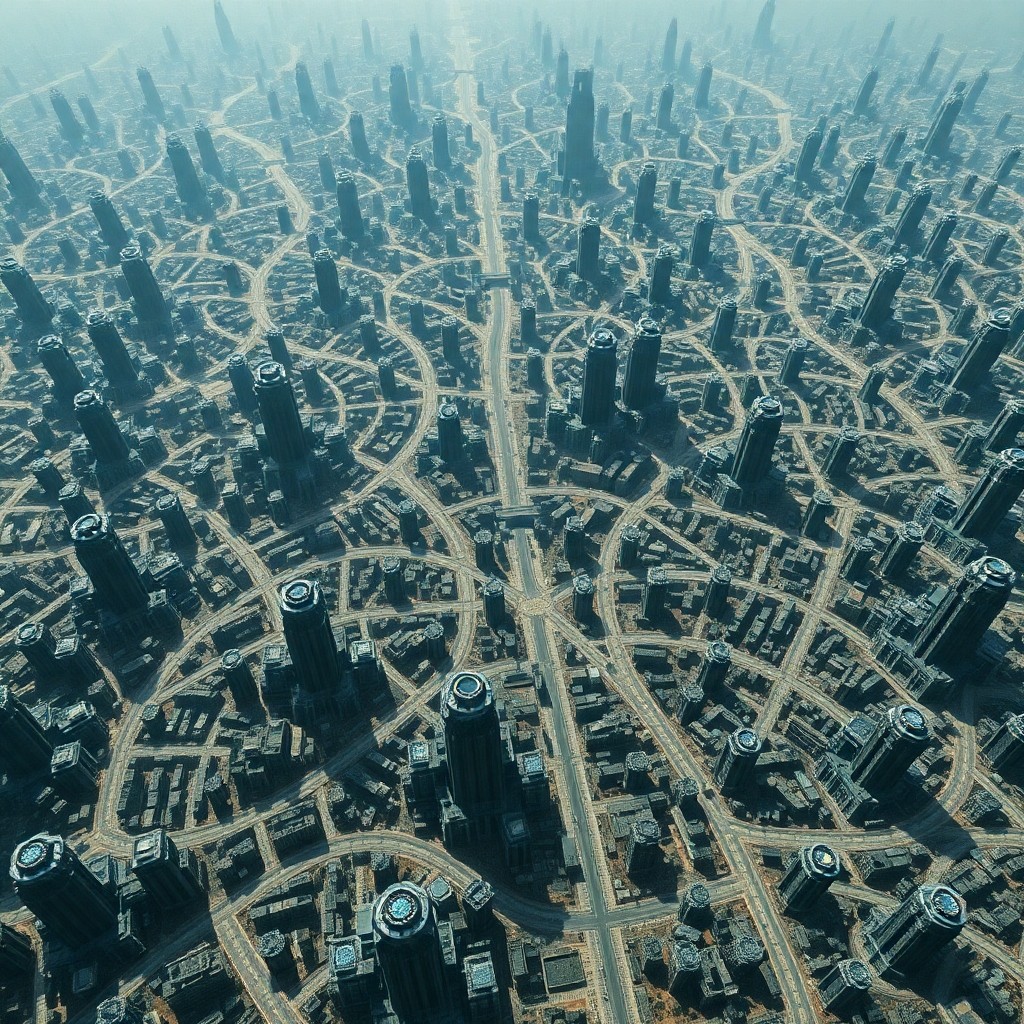
The industry has moved past the era of training models on a single 8-GPU node. We are now in the age of the Mega-Cluster. When news broke that companies like xAI, Meta, and Microsoft were spinning up clusters featuring 100,000+ H100s (and soon, Blackwell B200s), the immediate question from the engineering community wasn't just "How do they power it?" but rather, "How do they keep the GPUs fed?"
At this astronomical scale, compute is no longer your biggest problem. The network is the bottleneck. When you have 100,000 GPUs trying to synchronize gradients during a Global AllReduce, the standard networking stack doesn't just slow down—it collapses.
To survive the 100k frontier, we have to move beyond flat networking. We have to talk about NCCL (NVIDIA Collective Communications Library) optimization, Hierarchical Topologies, and moving the "compute" of communication directly into the fabric of the switches themselves.
The Physics of the Wall: Why Standard Scaling Fails
In a distributed training job (Data Parallel, Model Parallel, or Pipeline Parallel), GPUs must constantly share information. The most common operation is the AllReduce, where every GPU shares its gradients with every other GPU to ensure they all update their local weights identically.
In a small cluster (say, 128 GPUs), a simple Ring AllReduce algorithm works beautifully. Data moves in a circle; each GPU talks to its neighbor, and bandwidth is utilized efficiently.
But at 100,000 GPUs, the "Ring" becomes a nightmare.
- Latency Stacking: In a ring of 100,000 members, the "step" count to complete one rotation is massive. Even with microsecond latencies, the cumulative delay kills the TFLOPS utilization.
- The "Straggler" Effect: If one single NIC (Network Interface Card) out of 100,000 has a slight hiccup or a "flapping" link, the entire 100,000-GPU training job grinds to the speed of that one failing link.
- Noise (Jitter): System noise—OS interrupts, thermal throttling, or background monitoring—on any one node becomes a statistical certainty across 100k nodes.
To fix this, we have to stop treating the cluster as one giant pool and start treating it as a nested hierarchy.
Layer 1: The Anatomy of a Hierarchical Topology
When we build a 100k GPU cluster, we design it like a fractal. We optimize for the fastest possible communication at the smallest level and progressively use more robust (but potentially slower) protocols as we move outward.
1. The Intra-Node Level (NVLink)
Inside a single H100/H200 node, the GPUs aren't talking over traditional Ethernet or InfiniBand. They use NVLink.
- Bandwidth: 900 GB/s per GPU.
- Architecture: A fully connected mesh via NVSwitch.
- The Goal: Maximize local reduction. We perform as much math as possible here before the data ever touches the "real" network.
2. The Rail-Local Level (The Rack)
This is where things get interesting. In a 100k cluster, we use a Rail-Optimized design. If you have a rack of 32 GPUs, we don't just plug them into a random switch. We ensure that "GPU 0" on every node is connected to the same physical leaf switch. This creates a "rail."
- Why? It allows NCCL to perform collective operations across the "0-th" GPUs of all nodes without jumping through multiple layers of the spine. This minimizes hop counts.
3. The Pod and Data Center Level (InfiniBand/RoCEv2)
Once you leave the rack, you enter the territory of Fat-Tree Topologies or Dragonfly+. For 100k GPUs, we typically deploy a 3-tier Non-Blocking Fat-Tree:
- Tier 1 (Leaf): Connects nodes within a rack.
- Tier 2 (Spine): Connects multiple racks into a "Pod" (usually ~1,500 to 4,000 GPUs).
- Tier 3 (Core): The "Interconnect of Interconnects" that bridges the Pods.
The Engineering Challenge: At 100k GPUs, a non-blocking fat tree (where every GPU can talk to any other GPU at full line rate) is prohibitively expensive and physically massive. We often settle for a slight oversubscription at the Core tier, which is why optimizing NCCL to be "topology-aware" is no longer optional—it's survival.
Deep Dive: Optimizing NCCL for the Mega-Scale
NCCL is the "brains" of the communication. It decides which path a packet takes from GPU A to GPU B. To handle 100k units, we have to tune NCCL's internal "Search" and "Proto" logic.
1. Breaking the Ring: The Shift to Trees
As mentioned, Rings fail at scale. NCCL now defaults to Tree-based algorithms for large-scale collectives.
- Rings have $2(N-1)$ steps.
- Trees have $\log_2(N)$ steps. At 100,000, $\log_2(100,000)$ is roughly 17. Compare that to 100,000 steps in a ring. The latency reduction is orders of magnitude.
However, Trees are harder to load-balance. To solve this, we use Multi-Tree algorithms where NCCL builds multiple overlapping trees to saturate all available network rails simultaneously.
2. SHARP: Moving the Math into the Switch
One of the most profound technical leaps in 100k clusters is NVIDIA SHARP (Scalable Hierarchical Aggregation and Reduction Protocol).
Normally, if 1,000 GPUs want to sum their gradients, they send the data to each other, and the GPU CUDA cores do the addition. This wastes GPU cycles and doubles the traffic on the wire (send + receive).
With SHARP, the InfiniBand Switch does the math.
- As packets from different GPUs arrive at the switch, the switch's ASIC performs the floating-point addition in-line.
- The switch then sends only the result up to the next layer of the tree.
- Result: Network traffic is halved, and the GPU is freed up to do more training compute.
3. PXN and Tuning the NCCL Environment
To squeeze every bit of performance out of a 100k cluster, we have to manipulate the NCCL environment variables. This is the "black magic" of distributed systems engineering.
# Enable SHARP for hardware-accelerated reductions
export NCCL_SHARP_DISABLE=0

# Set the max number of channels to saturate the 400G/800G NICs
export NCCL_MAX_NCHANNELS=32

# Force NCCL to use the Tree algorithm for large messages
export NCCL_ALGO=Tree

# Crucial: Define the network interface bonding and GID index for RoCEv2
export NCCL_IB_GID_INDEX=3
export NCCL_IB_HCA=^mlx5_bond_0
The PXN (PCIe Cross-Node) Factor:
In dense H100 nodes, we use NCCL_P2P_LEVEL=5 (PXB). This allows NCCL to route data through the PCIe switch directly to the NIC, bypassing the CPU entirely. At 100k scale, any trip to the CPU's system memory is a death sentence for performance.
The Reality of Jitter: Handling the 100,000-Node "Noise"
In a cluster of this size, something is always broken. A fan might be spinning too slow on node #54,201, causing a 5% clock speed throttle. In a synchronous training loop, the entire cluster slows down to match that 5% throttle.
To mitigate this, engineering teams are moving toward Adaptive Routing and Packet Spraying.
Adaptive Routing (AR)
Standard Ethernet uses static routing (ECMP). If one path is congested, the packet just sits there. InfiniBand and high-end RoCEv2 implementations use Adaptive Routing. The switch looks at the egress queues of all possible paths to the destination and picks the least congested one on a per-packet basis.
Packet Spraying
Instead of sending a whole message down one path, we "spray" the individual packets across every available link in the fat tree. They arrive out of order, and the NIC reassembles them. This effectively eliminates "hot spots" in the network fabric, which are common when training LLMs with massive all-to-all patterns (like those found in Mixture of Experts / MoE models).
The Hype vs. The Substance: Why the "Blackwell" NVLink Switch Changes Everything
You might have heard the hype around the NVIDIA GB200 NVLink Switch System. Why did this cause such a stir in the engineering community?
Until now, NVLink was mostly limited to the inside of a single node (8 GPUs). If you wanted to talk to a GPU in the next rack, you had to exit NVLink, go through the NIC, into the InfiniBand switch, and back down.
The Blackwell era introduces a dedicated NVLink Switch Chassis. This allows up to 576 GPUs to be in a single NVLink Domain. To the software, these 576 GPUs look like one giant, unified GPU with 1 PB/s of aggregate bandwidth.
The Technical Substance: By expanding the NVLink domain, we move the "Hierarchy boundary" further out.
- Old Way: Hierarchy shift at 8 GPUs.
- New Way (Blackwell): Hierarchy shift at 576 GPUs.
This reduces the load on the InfiniBand/Ethernet spine by orders of magnitude because the vast majority of ReduceScatter and AllGather operations happen within the lightning-fast NVLink fabric. For 100k GPU clusters, this means the "Core" of the network doesn't need to be as massive, reducing latency and power consumption.
Engineering for Failure: The Silent Killer of Scaling
When you scale to 100k, the MTBF (Mean Time Between Failure) of the cluster is measured in hours, not months.
Rail-Aware Debugging
If a training job slows down, finding the culprit among 100,000 GPUs is like finding a needle in a haystack. We use NCCL Topology Dumps. By analyzing the XML output of a NCCL topology detection, we can see if a specific PCIe lane has downgraded from Gen5 to Gen3, or if a specific InfiniBand port is reporting excessive retransmits.
<!-- Example NCCL Topology Snip -->
<system version="1">
  <cpu numaid="0" affinity="0-15">
    <pci bus="01:00.0" device="0x20b5" vendor="0x10de" link_speed="32 GT/s" link_width="16">
      <gpu dev="0" sm="90" />
      <nic dev="mlx5_0" speed="400000" />
    </pci>
  </cpu>
</system>
If link_speed shows anything less than the hardware spec, that's your "straggler." In a 100k cluster, we automate this. We run a "pre-flight" NCCL check before every training run. If any node's bandwidth is <95% of the theoretical peak, the node is automatically quarantined, and a spare node is swapped in.
The Road Ahead: 10^21 Flops and Beyond
Scaling to 100,000 GPUs isn't just about buying more hardware. It's an exercise in topology-aware software engineering.
We are reaching the limits of what traditional "send/receive" networking can do. The future of 100k+ clusters lies in:
- In-Network Computing: Switches that don't just move data, but process it (SHARP v4+).
- Optical Circuit Switching (OCS): Using mirrors to reconfigure the physical topology of the data center in real-time based on the model's communication graph (similar to Google's TPU v4/v5 architecture).
- Unified Memory Fabrics: Where the distinction between "local GPU memory" and "remote GPU memory" disappears entirely.
The engineering required to keep 100,000 GPUs synchronized is as complex as the AI models themselves. But for those who master the hierarchy—who understand the interplay between NVLink, SHARP, and NCCL Tree algorithms—the reward is the ability to train the next generation of models that will define the future of technology.
The cluster is no longer a collection of servers. It is the computer. And the network is its backplane. To build at this scale is to stop being a "system administrator" and start being a "fabric architect."
Welcome to the 100k GPU frontier. Let’s get to work.