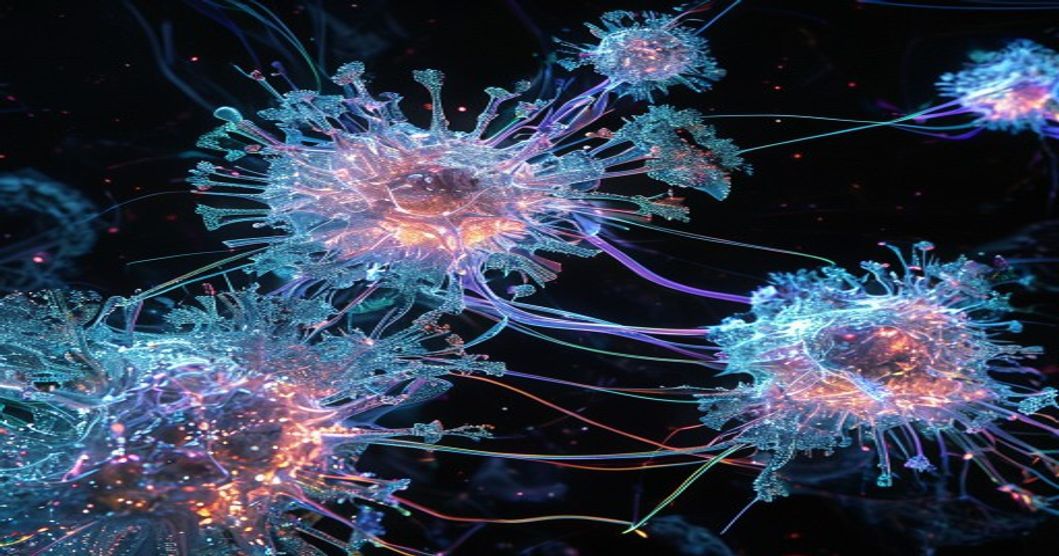
Imagine a future where our immune system doesn't just react to threats, but is precisely tutored by designer nanobots, self-assembling themselves inside bioreactors to form perfect immunological targets. A future where vaccine development isn't a race against time, but a systematic engineering challenge, rapidly addressing emerging pathogens with modular, highly effective solutions. This isn't science fiction anymore. Welcome to the thrilling frontier where synthetic biology is rewriting the playbook for viral vaccines, ushering in an era of Self-Assembling Nanoparticle Viral Vaccine Platforms (SAVs).
For decades, vaccines have been our shield, arguably the greatest public health triumph in history. But the relentless pace of viral evolution, the logistical nightmares of cold chains, and the often-slow development cycles expose the limitations of traditional approaches. The recent mRNA vaccine revolution gave us a breathtaking glimpse into the power of genetic instruction, demonstrating unprecedented speed and efficacy. Yet, even these marvels have their own unique stability and delivery hurdles.
What if we could combine the genetic precision of mRNA with the structural robustness and optimal antigen presentation of a perfectly engineered viral particle, without actually using a live virus? This is exactly where synthetic biology steps in, transforming biology from a field of discovery into an engineering discipline. We’re moving beyond finding what works, to designing and building what we need, molecule by molecule, circuit by circuit.
The mRNA Revolution: A Glimpse into the Future (and its Limitations)
Before we dive headfirst into the nanotech future, let's acknowledge the seismic shift mRNA vaccines brought. Suddenly, we weren't injecting weakened viruses or purified proteins; we were delivering a blueprint, a digital instruction manual for our own cells to become mini-vaccine factories. The speed of development was staggering, proving that genetic information could be a powerful, agile weapon against pandemics.
This was a triumph of genetic engineering and delivery science. But the mRNA platform, for all its brilliance, isn't without its engineering quirks:
- Fragility: mRNA is notoriously unstable, demanding ultra-cold storage, a significant barrier for global distribution.
- Transient Expression: The instructions are temporary. While good for safety, it means a precise, sustained immune response relies on repeated, well-timed boosts.
- Delivery Vehicle: Lipid nanoparticles (LNPs) are crucial for mRNA delivery, but designing the perfect LNP for every scenario remains an active area of research, balancing efficacy with potential reactogenicity.
The mRNA era taught us that programming our own cells is incredibly powerful. The next logical step? Programming our cells to build a superior, pre-designed, self-organizing structure that optimizes every aspect of immune stimulation. This is the core premise of SAVs, powered by synthetic biology.
Enter Synthetic Biology: Programming Life for Precision Vaccines
Synthetic biology is, at its heart, about applying engineering principles—standardization, modularity, abstraction, rational design—to biological systems. It's about breaking down biological complexity into manageable, programmable units, then reassembling them to create novel functions. Think of it like a biological CAD/CAM system, but instead of designing car parts, we’re designing proteins, enzymes, and even entire genetic circuits.
For vaccine development, this means:
- Rational Design: Instead of trial-and-error, we predict, simulate, and design protein structures and interactions at an atomic level.
- Modular Components: We create a toolbox of genetic parts (promoters, ribosome binding sites, protein domains) that can be mixed and matched.
- Predictable Assembly: We engineer molecules that precisely self-assemble into desired structures, much like molecular LEGOs.
- Programmable Functionality: We can imbue these structures with specific biological activities, from targeting immune cells to enhancing stability.
The goal? To move from "biological discovery" to "biological engineering." We're not just finding a vaccine; we're building one from the ground up, optimized for efficacy, scalability, and robustness.
Anatomy of a Self-Assembling Nanoparticle (SAV): The Molecular LEGO Kit
So, what exactly is a self-assembling nanoparticle vaccine? Imagine a perfectly symmetrical, nanoscale cage or scaffold, adorned with multiple copies of the exact viral antigen your immune system needs to see. This isn't just a jumbled collection of molecules; it's an exquisitely ordered, highly repetitive structure that screams "DANGER!" to immune cells.
Let's dissect the core components:
1. The Core Scaffolding: Designer Proteins That Build Themselves
At the heart of an SAV is a self-assembling protein scaffold. These are often naturally occurring proteins engineered for stability and predictable assembly, or even de novo proteins designed from scratch.
- Natural Inspirations: Proteins like ferritin (an iron storage protein), bacteriophage capsids (the protein shells of viruses), or encapsulin-like proteins are superstars here. They naturally form highly symmetrical, cage-like structures (e.g., icosahedrons, dodecahedrons) from multiple identical protein subunits. This inherent symmetry is a goldmine for engineers.
- The Engineering Edge: Synthetic biologists modify these scaffold proteins. We introduce mutations to enhance their stability, tune their assembly kinetics, or, critically, engineer specific sites onto their surfaces where we can "bolt on" our target antigens.
- De Novo Design: The ultimate synthetic biology flex. Imagine computationally designing a protein sequence that never existed in nature but is programmed to fold into a specific shape and then precisely interact with identical copies to form a perfect, custom-sized nanoparticle. This is no longer theoretical; tools like Rosetta are achieving this regularly.
The beauty of these scaffolds is their programmed self-assembly. When the individual protein subunits are produced in a cell, they spontaneously come together under the right conditions to form the larger nanoparticle. This dramatically simplifies the manufacturing process – no complex chemical conjugation steps needed.
2. Antigenic Display: The Immune System's Target Practice
This is where the vaccine's specific targeting comes in. We need to display the viral antigen (e.g., the Spike protein of SARS-CoV-2, or parts of it) in a way that maximizes immune recognition.
- Genetic Fusion: The most elegant approach. The gene for the antigen is directly fused to the gene for the scaffold protein. When this chimeric gene is expressed, the single fusion protein includes both the scaffold component and the antigen. Upon production, these fusion proteins self-assemble, displaying multiple copies of the antigen on the nanoparticle's surface in a highly ordered, repetitive array.
- Why this matters: This multivalency and ordered presentation are crucial. Immune B cells are exquisitely sensitive to repeating patterns. Think of it like a dense forest of identical flags on the nanoparticle surface – far more striking and memorable than a single, isolated flag. This significantly enhances antibody responses.
- Covalent Attachment / Click Chemistry: For antigens that are harder to fuse genetically or for exploring diverse combinations, chemical conjugation methods can be used to attach antigens to pre-formed scaffolds. This offers flexibility but can add complexity to manufacturing.
3. Adjuvanticity & Immunomodulation: A Built-In Booster
Many traditional vaccines require an "adjuvant" – an additional component that helps stimulate a stronger immune response. SAVs often have inherent adjuvanticity:
- Pattern Recognition Receptor (PRR) Ligation: The repetitive, particulate nature of nanoparticles mimics natural viral structures. This allows them to effectively engage PRRs on immune cells (like dendritic cells), signaling "danger" and activating a robust innate immune response, which in turn primes a powerful adaptive response.
- Efficient Antigen Presentation: Nanoparticles are perfectly sized (typically 20-200 nm) to be efficiently taken up by antigen-presenting cells (APCs) like dendritic cells. Once internalized, they are processed and presented to T cells and B cells far more effectively than soluble antigens.
4. Programmable Assembly: The Dance of Molecular Recognition
The "self-assembling" part isn't magic; it's precise molecular engineering. We design protein interfaces with specific amino acid sequences that act like molecular velcro, only binding to each other in a predefined way.
- Interface Design: Computational tools are used to predict and design complementary protein surfaces that will 'stick' together with high affinity and specificity, driving the formation of the desired 3D structure. Think of designing a lock and key, but across dozens or hundreds of subunits simultaneously.
The Engineering Stack: From Bits to Biologics
Building these sophisticated molecular machines requires a full-stack engineering approach, spanning computational design, high-throughput biological synthesis, rigorous testing, and iterative learning.
I. Design & Simulation: The Computational Canvas
This phase is pure computational wizardry, where algorithms and massive compute power bring molecular blueprints to life.
A. De Novo Protein Design & Structural Bioinformatics
Rosetta & AlphaFold/RoseTTAFold: These are the titans. We're using them not just to predict protein structures but to design them.
- Rosetta: A powerhouse for de novo protein design. It leverages sophisticated energy functions and sampling algorithms to explore vast conformational spaces, identifying amino acid sequences that will fold into desired shapes and interact in specific ways. For SAVs, we design protein monomers that precisely interface with each other to form symmetrical multimers (e.g., 60 identical subunits forming an icosahedral cage). This involves specifying target geometries, contact points, and optimizing the amino acid sequence to achieve both stability and self-assembly.
- AlphaFold/RoseTTAFold (and their successors): While initially lauded for prediction, their underlying principles are rapidly being adapted for design. By understanding the rules of protein folding with unprecedented accuracy, we can infer how to create sequences that will fold as desired. This accelerates the iterative design cycle, moving from theoretical concept to a plausible sequence faster than ever.
Molecular Dynamics Simulations: Once a design candidate emerges, we run simulations to test its stability, dynamics, and antigen accessibility in a simulated cellular environment. Does it stay folded? Do the antigens wiggle too much? Is the scaffold likely to aggregate? These "digital stress tests" save countless hours in the lab.
Epitope Prediction: Sophisticated algorithms analyze the antigen sequence and structure to predict which parts (epitopes) are most likely to be recognized by B cells and T cells, ensuring our display is immunologically relevant.
Compute Scale Perspective: This stage is a compute behemoth. Designing a de novo self-assembling protein can involve sampling billions of possible amino acid sequences and conformations. Molecular dynamics simulations can run for weeks on high-performance computing clusters, chewing through hundreds of GPU cores. Cloud platforms like AWS, GCP, and Azure provide the elasticity to spin up thousands of virtual CPUs and GPUs for parallel processing of design candidates and simulations. We're talking petabytes of simulation data, managed by distributed file systems and sophisticated workflow orchestrators.
B. Genetic Circuit Design & Optimization
Once the protein sequence is designed, we need to encode it in DNA and optimize its expression in a host cell.
Codon Optimization: Different organisms prefer different codons (triplets of DNA that code for amino acids). We optimize the gene sequence to match the codon usage bias of our chosen expression host (e.g., E. coli, yeast) to maximize protein production.
Promoter & Ribosome Binding Site (RBS) Tuning: These genetic elements control the rate and efficiency of protein synthesis. Synthetic biology offers a library of characterized promoters (strong, weak, inducible) and RBS sequences, allowing us to precisely control gene expression levels.
Pseudocode Example for a SAV Gene Construct:
# Example: Genetic Construct for a Self-Assembling Nanoparticle Antigen Fusion
# This represents a 'gene program' for our biological factory

gene_construct = {
    "Promoter": "T7_Strong_Inducible_Promoter",  # Controls when and how much protein is made
    "RBS": "Optimized_Strong_RBS",              # Controls efficiency of translation initiation
    "Spacer_Sequence_1": "AGGAGG",             # Optional, for optimal translation initiation distance

    "Antigen_Gene": {                          # The gene encoding our viral antigen (e.g., Spike RBD)
        "Sequence": "ATGGTT...TTATGA",         # Codon-optimized DNA sequence for Spike RBD
        "Tags": ["Glycine_Serine_Linker"]      # Flexible linker to connect antigen to scaffold
    },

    "Scaffold_Protein_Gene": {                 # The gene encoding our self-assembling scaffold protein (e.g., Ferritin monomer)
        "Sequence": "ATGCGG...TTAGGC",         # Codon-optimized DNA sequence for Ferritin
        "Assembly_Motif": "Engineered_Dimer_Interface" # Key protein-protein interaction domain for assembly
    },

    "Terminator": "T7_Transcription_Terminator", # Signals end of transcription
    "Antibiotic_Resistance_Marker": "Kanamycin_Resistance_Gene" # For plasmid selection
}

# This 'code' is translated by the cell into functional proteins that then self-assemble.
II. Build & Synthesize: The Biological Foundry
Once designed, the blueprint must be physically constructed. This is where automation and advanced molecular biology shine.
A. Gene Synthesis & Automated Cloning
- Synthetic DNA Providers: Companies like Twist Bioscience or Integrated DNA Technologies can synthesize custom DNA sequences (our gene constructs) from scratch, delivering them quickly and accurately. This bypasses tedious manual cloning.
- Automated Cloning Systems: Robots perform complex molecular biology steps like Gibson Assembly or Golden Gate cloning, rapidly assembling multiple DNA fragments into a single, functional plasmid. This enables high-throughput construction of many design variants simultaneously.
- Infrastructure Angle: Robotic liquid handlers, plate readers, and automated incubators are the workhorses here, running 24/7 to build libraries of genetic constructs.
B. Expression Systems & Bioreactor Scaling
The plasmids are then introduced into "host" cells that act as miniature factories to produce our SAV proteins.
Microbial Factories (E. coli, Pichia pastoris, Saccharomyces cerevisiae): These are often the first choice for scalability and cost-effectiveness. They grow rapidly, produce high yields, and are relatively easy to culture in large bioreactors.
- Challenge: Lack complex post-translational modifications (like glycosylation) found in human cells. For some antigens, this matters; for scaffold proteins, it often doesn't.
Eukaryotic Systems (Insect Cells, Mammalian Cells): When complex protein folding, disulfide bonds, or specific glycosylation patterns are critical for antigenicity, insect cells (e.g., baculovirus expression system) or mammalian cells (e.g., HEK293 cells) are preferred, albeit at higher cost and complexity.
Bioreactor Engineering: Scaling up production from milligrams in a lab flask to kilograms in a 10,000-liter bioreactor is a massive engineering feat. It involves precise control of temperature, pH, oxygen levels, nutrient feeding strategies, and shear forces to optimize cell growth and protein expression. Downstream processing (purification, filtration) then isolates the self-assembled nanoparticles.
Infrastructure Angle: Automated bioreactor farms, tangential flow filtration systems, chromatography skids – this is where chemical engineering meets biotechnology. Data from hundreds of sensors (DO, pH, CO2, biomass) are continuously streamed and analyzed to optimize runs and predict yields.
III. Test & Characterize: The Validation Gauntlet
Does it work? Is it stable? Does it induce the right immune response? Rigorous testing is non-negotiable.
A. Physicochemical Characterization
- Dynamic Light Scattering (DLS): Measures nanoparticle size and polydispersity (uniformity).
- Transmission Electron Microscopy (TEM) & Cryo-Electron Microscopy (Cryo-EM): Provides high-resolution images to confirm morphology, symmetry, and overall structure. Crucial to verify self-assembly fidelity.
- Mass Spectrometry: Confirms protein identity, purity, and post-translational modifications.
- Stability Assays: Stress testing against heat, pH, and mechanical agitation to predict shelf-life and cold-chain requirements.
B. Antigenicity & Immunogenicity Assays
- ELISA (Enzyme-Linked Immunosorbent Assay): Measures antibody binding to the displayed antigen.
- Surface Plasmon Resonance (SPR): Quantifies binding kinetics and affinity between the nanoparticle and target antibodies.
- In Vitro Cell-Based Assays: Assessing uptake by immune cells, activation of cytokine production, and T-cell stimulation.
- Animal Models: The critical step. Testing in mice, ferrets, or non-human primates to evaluate safety, immunogenicity (antibody titers, neutralizing antibodies, T-cell responses), and protective efficacy against viral challenge.
C. Manufacturability & Quality Control
Can it be produced consistently at scale, meeting stringent regulatory standards? This involves developing robust analytical methods for purity, potency, and identity throughout the manufacturing process.
IV. Learn & Iterate: The Feedback Loop
Every piece of data from testing feeds back into the design phase.
- Data Pipelines & Machine Learning: High-throughput screening generates enormous datasets. Machine learning algorithms analyze these data to identify correlations between design parameters (e.g., linker length, scaffold mutation) and desired outcomes (e.g., assembly yield, immunogenicity). This predictive power accelerates the iterative design-build-test-learn cycle.
- A/B Testing in Biology: Running experiments with slight variations in design, expression, or purification to identify optimal conditions, much like software engineers test different user interfaces.
Why Self-Assembling Nanoparticles are a Game-Changer for Vaccines
This deep dive into the engineering stack reveals why SAVs are not just a technical curiosity but a transformative platform:
1. Enhanced Efficacy: Precision Targeting for the Immune System
- Optimal Antigen Presentation: The repetitive, ordered display of antigens on a nanoscale particle mimics natural virus surfaces, profoundly enhancing B cell activation and germinal center responses. This leads to higher antibody titers, broader neutralizing antibody responses, and potentially more durable immunity.
- Inherent Adjuvanticity: The particulate nature triggers innate immune pathways, removing the need for separate adjuvant components in many cases, simplifying formulation.
- Broad Protection (Pan-Viral Vaccines): By precisely displaying conserved epitopes from multiple viral strains or even entire viral families, SAVs hold immense promise for "pan-vaccines" – a single shot protecting against many variants or even entirely different viruses. Imagine a universal flu vaccine or a single coronavirus vaccine effective against past, present, and future variants.
2. Scalability & Manufacturability: Ready for the Next Pandemic
- High-Yield Microbial Production: Many SAVs can be produced in high-yield, low-cost microbial expression systems (like yeast or E. coli), making them far more economical and scalable than complex mammalian cell cultures.
- Reduced Cold-Chain Requirements: The robust protein-based nanoparticles often exhibit superior thermostability compared to lipid-nanoparticle-encapsulated mRNA, simplifying storage and distribution, particularly in resource-limited settings. This is a monumental logistical advantage.
- Simplified Purification: The self-assembling nature means the desired product is a distinct, highly organized particle, often easier to purify from cellular components than a mixture of individual proteins.
3. Rapid Prototyping & Pandemic Preparedness
- Modular Design: The scaffold and antigen components are independent modules. To create a new vaccine, you essentially swap out the antigen gene on a proven scaffold. This "plug-and-play" capability dramatically accelerates vaccine development.
- Faster Response to Variants: When a new variant emerges, computational design can quickly identify new optimal antigen sequences, synthesize the DNA, and express it on existing, validated SAV platforms. This slashes the timeline from identification to clinical candidate.
4. Cost-Effectiveness & Accessibility
- Combined with high production yields and reduced cold-chain needs, SAVs have the potential to be significantly more cost-effective per dose, making advanced vaccine technology accessible to a wider global population.
The Road Ahead: Engineering Challenges and the Future Frontier
While the promise is immense, the journey is still paved with fascinating engineering challenges:
- Predictive Power of AI: Can we achieve de novo design with 100% predictability? The current cycle still involves empirical testing. Future AI models might allow us to simulate, refine, and validate designs entirely in silico, eliminating many wet lab steps.
- Multi-Component Assembly: Designing nanoparticles that incorporate not just one antigen, but multiple antigens, adjuvants, or targeting moieties in precise locations and ratios. Imagine an SAV that displays a flu antigen, a common cold antigen, and a cancer-targeting peptide.
- Delivery and Targeting: Engineering SAVs for specific cell or tissue targeting, improving uptake by particular immune cells, or even mucosal delivery for respiratory infections.
- Regulatory Pathways: As we engineer increasingly novel biological entities, regulatory bodies will need to adapt to assess their safety and efficacy efficiently.
- Global Health Equity: Ensuring that these advanced technologies are developed and deployed with an eye towards equitable access for all populations, not just the privileged few.
The vision is clear: to move beyond simply reacting to pathogens, and instead proactively design and program biological systems to protect human health with unprecedented precision and efficiency.
Wrapping Up: The Future is Built, Not Just Discovered
We are at an inflection point in vaccine science, fueled by the relentless innovation of synthetic biology and computational power. The era of self-assembling nanoparticle viral vaccines isn't just about incrementally improving existing approaches; it's about fundamentally redesigning the way we interact with pathogens. We're building molecular machines with deliberate intent, programming life to defend life.
This journey is a testament to the power of cross-disciplinary engineering – where biology, computer science, materials science, and chemical engineering converge to tackle humanity's grand challenges. The next time you hear about a new vaccine breakthrough, remember the invisible biological assembly lines humming away, meticulously crafting the future of immunity, one self-assembling nanoparticle at a time. The revolution isn't coming; it's being engineered right now, in labs and cloud servers around the world.