In the relentless march towards an ever more data-hungry world, our hyper-scale data centers are no longer just server farms; they are the digital heart of civilization, processing exabytes of information, training colossal AI models, and serving billions of users with near-instantaneous speed. But beneath the gleaming rows of servers and the hum of cooling fans, a silent crisis has been brewing. The very interconnect fabric designed to bind these digital behemoths together is straining under the weight of its own success.
Traditional data center networks, built on decades-old paradigms of electrical switching and fixed-function ASICs, are bumping against fundamental physical limits. They're becoming too power-hungry, too complex, too rigid, and frankly, too slow for the next generation of planetary-scale workloads.
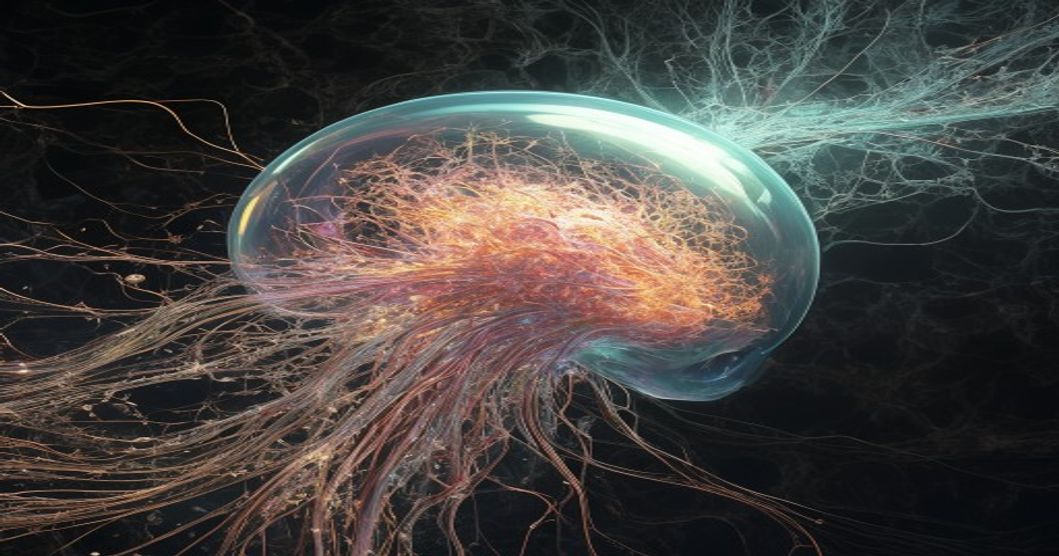
Imagine: a brain the size of a planet, with neurons firing at the speed of thought. That's the ambition for our next-gen data centers. But currently, the "axon" connecting these neurons is often an afterthought, a bottleneck.
We believe the future of data center networking isn't just an evolution; it's a revolution driven by two profound shifts: disaggregated optical network fabrics and P4-programmable data planes. Together, they represent a paradigm shift, promising to deliver the bandwidth, low latency, flexibility, and power efficiency required to unlock truly planetary-scale compute.
Let's dive headfirst into how we're architecting this future.
The Cracks in the Copper Kingdom: Why Traditional Networks Are Failing Us
For years, the gold standard for data center networking has been the Clos architecture, a beautiful, high-radix, multi-stage fat tree built predominantly with Ethernet switches. It's scaled remarkably well, delivering predictable latency and robust performance. But scale has a cost.
The Elephant in the Rack: Power, Latency, and Rigidity
- Electrical Interconnect Hell: Every time a signal travels over copper or within an electrical switch, it faces resistance, attenuation, and capacitance. This means signal regeneration, complex equalization, and ultimately, massive power consumption. At 400GbE and soon 800GbE, the power budget for SERDES (serializer/deserializer) and physical layer components becomes astronomical. The chips themselves generate immense heat, requiring expensive cooling.
- Fixed-Function ASICs: The beating heart of most network switches is a highly optimized, fixed-function Application-Specific Integrated Circuit (ASIC). These chips are incredible at what they do – forwarding packets at line rate – but they are inherently rigid. They're designed for a specific set of protocols (Ethernet, IP, TCP, etc.) and a predefined pipeline.
- Want to introduce a new tunneling protocol? Wait for the next generation of silicon.
- Need custom telemetry beyond SNMP counters? Good luck.
- Looking to implement an application-aware load balancing algorithm in hardware? Not possible without software intervention, which introduces latency and reduces throughput. This rigidity stifles innovation at the data plane, forcing complex, high-performance logic into the hosts (SmartNICs/DPUs) or into the control plane, adding latency and complexity.
- The "Big Switch" Illusion: While Clos networks provide horizontal scalability, they still rely on hierarchical layers of physical switches. This means multiple hops, increased latency, and a fragmented view of the network fabric. The ideal is a single, massive, logical switching plane.
- Resource Inefficiency: Traditional networks often treat all traffic equally, even though a storage flow, an AI model training flow, and a web request have vastly different requirements. This leads to suboptimal resource allocation and performance bottlenecks.
As we build data centers that house millions of servers, each capable of trillions of operations per second, the network can no longer be a silent partner; it must become an active, intelligent, and infinitely scalable extension of the compute fabric itself.
Enter the Light: The Promise of Disaggregated Optical Network Fabrics
The solution to many of these woes lies in shedding electrons for photons. Fiber optics have long been the backbone of wide-area networks, but bringing them into the heart of the data center at massive scale has been a monumental challenge. Until now.
What Does "Disaggregated Optical Fabric" Actually Mean?
At its core, disaggregation is about breaking down monolithic systems into their constituent, independently manageable parts. In networking, this often means separating the control plane from the data plane, and the hardware from the software.
For optical fabrics, it takes this further:
- Decoupling Optical Switching from Electrical Switching: Instead of every port on an electrical switch needing an optical transceiver, we envision a fabric where optical paths are established directly between endpoints, potentially bypassing layers of electrical conversion and switching.
- Separate Forwarding Elements: The packet processing logic (forwarding) can be independent of the physical optical medium.
- Centralized, Software-Defined Control: A unified brain orchestrating both the optical and electrical (P4-programmable) components.
Why Optical? The Physics of Infinite Bandwidth
Light is fast, efficient, and carries immense information.
- Speed & Latency: Photons travel orders of magnitude faster than electrons in copper. In a large data center, even nanoseconds matter for distributed systems and real-time applications. Direct optical paths drastically reduce propagation delays and eliminate electrical-optical-electrical conversions.
- Bandwidth Density: A single optical fiber can carry multiple wavelengths, each acting as an independent channel, multiplying its capacity (Wavelength Division Multiplexing - WDM). Coherent optics push this even further, encoding data onto multiple dimensions of the light wave itself.
- Power Efficiency: The power consumed by optical transmission is significantly lower per bit than electrical signaling, especially over longer distances. Removing bulky electrical components and their cooling requirements leads to a dramatic reduction in overall data center power draw and carbon footprint.
- Reach: Optical signals can travel much further without regeneration, simplifying cable plant management and enabling truly massive-scale data centers spanning kilometers.
The Anatomy of a Modern Optical Fabric
Building a large-scale, dynamic optical network isn't just about stringing fiber; it involves sophisticated technology:
- Silicon Photonics (SiP): The Game Changer: This is the magic ingredient. Instead of discrete optical components, SiP integrates lasers, modulators, waveguides, and detectors onto a silicon chip using standard CMOS manufacturing processes. This dramatically reduces size, cost, and power consumption, making optical integration economically viable at data center scale. Think of it as "light on a chip."
- Tunable Lasers & Coherent Optics: The ability to dynamically change the wavelength of a laser or use advanced modulation schemes (coherent optics) allows for flexible allocation of bandwidth. A server can "tune in" to a specific wavelength to communicate with another, essentially creating a dedicated, high-bandwidth optical circuit on demand.
- Optical Circuit Switches (OCS) / Reconfigurable Optical Add-Drop Multiplexers (ROADMs): These are the core elements of the optical fabric.
- OCS: Mechanical or MEMS-based switches that physically steer light paths. They are incredibly slow (milliseconds to seconds to reconfigure) but offer pristine optical paths with no electrical conversion. Ideal for long-lived, high-bandwidth connections.
- ROADMs: More common in telco networks, these allow dynamic adding or dropping of specific wavelengths from a fiber without disrupting others. More flexible than OCS but also carry a higher cost and complexity. The future likely involves hybrid approaches, potentially with faster, non-mechanical optical packet switches emerging.
- Co-Packaged Optics (CPO): Today, optical transceivers are pluggable modules (QSFP, OSFP) that sit next to the ASIC. CPO integrates the optics directly onto the same substrate as the switching ASIC. This drastically reduces the electrical trace length, improving signal integrity, reducing power consumption, and enabling higher bandwidth density on the ASIC itself. This is critical for 800GbE and beyond.
Challenges of an Optical Future
It's not all sunshine and photons. Building and managing an optical fabric comes with its own complexities:
- Control Plane Complexity: Dynamically establishing and tearing down optical circuits requires a sophisticated control plane that understands network topology, traffic demands, and resource availability.
- Integration with Electrical: How do you seamlessly bridge the optical domain with the inevitable electrical packet processing at the network edges?
- Reliability & Monitoring: Optical networks are sensitive. Maintaining signal integrity, detecting faults, and performing real-time diagnostics require specialized tools and expertise.
This is where the second pillar of our future architecture comes into play: the intelligent, programmable data plane.
The Brain of the Network: P4-Programmable Data Planes
If an optical fabric provides the raw, unadulterated bandwidth, a P4-programmable data plane provides the intelligence, flexibility, and surgical precision needed to orchestrate that bandwidth for planetary-scale applications.
Breaking the ASIC Monopoly: From Fixed-Function to Flexible Logic
For decades, network innovation was bottlenecked by ASIC development cycles. A network engineer's request for a new feature meant a multi-year wait for silicon vendors to design, fabricate, and ship new chips. P4 changes this fundamentally.
P4 (Programming Protocol-Independent Packet Processors) is an open-source domain-specific language designed to program the forwarding behavior of network devices. It allows engineers to define how packets are parsed, processed, and forwarded in a hardware-independent manner.
The P4 Pipeline Explained
Think of a network packet flowing through a P4-programmable switch like a car moving through an assembly line, but with a highly customizable process:
- Parser: This stage inspects the incoming packet and extracts headers (Ethernet, IP, TCP, custom headers). You define exactly what headers to look for and in what order.
- Match-Action Tables: This is the core of the programmability.
- Match: Based on the parsed headers, the switch looks up values in various tables (e.g., MAC address table, IP routing table, custom policy tables).
- Action: If a match is found, a corresponding action is executed. This can be anything from simple forwarding to modifying headers, incrementing counters, encapsulating packets, or even generating new packets.
- Deparser: After all actions are performed, the deparser reassembles the packet, including any modified or new headers, and prepares it for transmission.
This simple yet powerful model allows network engineers to define virtually any packet processing logic at wire speed, directly in the hardware.
Why P4 is a Game Changer for Planetary Scale
- Unprecedented Visibility with In-band Network Telemetry (INT): P4 allows us to insert telemetry metadata directly into the packet itself as it traverses the network. This includes hop-by-hop latency, queue occupancy, link utilization, and congestion signals. This provides an end-to-end, granular view of network state, enabling real-time diagnostics, proactive congestion control, and dynamic path optimization. Imagine seeing exactly where a packet spent its time, at every single hop.
- Custom Protocols & Application-Aware Networking: No longer are we beholden to standard Ethernet or IP. P4 allows us to define and accelerate custom tunneling protocols, header extensions, or even entirely new network protocols tailored to specific application needs (e.g., RDMA over Converged Ethernet - RoCE, NVMe over Fabrics, custom RPCs). This is critical for high-performance computing, AI/ML clusters, and disaggregated storage.
- Dynamic & Intelligent Load Balancing: P4 can implement sophisticated, application-aware load balancing algorithms in hardware. Instead of simple hash-based load balancing that can lead to flow unfairness, P4 can inspect application-layer context, track flow sizes, or use real-time congestion signals to make intelligent forwarding decisions, ensuring optimal resource utilization.
- Network Function Acceleration: Functions traditionally run in software on servers (like firewalls, load balancers, NAT gateways) can be offloaded and accelerated directly into P4-programmable switches or SmartNICs/DPUs. This boosts performance, reduces latency, and frees up valuable CPU cycles on compute hosts.
A Glimpse into P4 (Conceptual Example)
While a full P4 program is complex, imagine a simple snippet illustrating an INT action:
// ... inside a match-action table ...

action add_int_metadata(ingress_port, egress_port, queue_occupancy) {
    // Add custom INT header to the packet
    @headers.int_report.ingress_port = ingress_port;
    @headers.int_report.egress_port = egress_port;
    @headers.int_report.queue_occupancy = queue_occupancy;
    // ... other telemetry data ...
}

table forward_and_telemetry {
    key = {
        hdr.ipv4.dstAddr : lpm;
    }
    actions = {
        add_int_metadata;
        // ... standard forwarding actions ...
    }
    // ... default actions ...
}
This conceptual snippet shows how an action can dynamically inject telemetry data into a packet's header based on ingress/egress ports and current queue depth, all at line rate.
The Grand Unification: Marrying Light and Logic
The true power of this vision emerges when we integrate disaggregated optical fabrics with P4-programmable data planes. We're not just replacing copper with fiber; we're building a fundamentally new network operating system.
A New Network Architecture: The "Logical Mesh"
Imagine a network where:
- The Core is Optical: A vast, low-latency, high-bandwidth optical fabric capable of establishing direct, wavelength-level connections between any two endpoints (servers, storage arrays, accelerators). This fabric is slow to reconfigure but provides pristine, high-capacity pipes.
- The Edges are P4-Programmable: At the ingress/egress points of this optical fabric, or directly integrated into servers via SmartNICs/DPUs, we have P4-programmable switches or network interface cards. These devices are lightning fast, capable of line-rate packet processing, and can dynamically shape traffic, apply policies, and collect granular telemetry.
- A Unified SDN Control Plane: A centralized, software-defined network (SDN) controller acts as the orchestrator. It has a global view of the entire network (optical and electrical), understands application demands, and translates high-level policies into low-level configurations for both the optical switches (e.g., setting up a specific wavelength path) and the P4 devices (e.g., programming forwarding rules, enabling INT).
Bringing it to Life: Practical Synergies
- Dynamic Optical Circuit Provisioning: The SDN controller, informed by P4-generated telemetry (e.g., "this tenant's GPU cluster needs 800Gbps to this storage array now"), can instruct the optical fabric to establish a dedicated wavelength path between the source and destination. This path bypasses electrical hops, providing ultra-low latency and uncontended bandwidth. Once the job is done, the circuit can be torn down and the wavelength reallocated.
- Intelligent Traffic Steering: P4 devices at the edge can analyze traffic flows, identify critical workloads (e.g., inter-GPU communication in a large AI training job), and then signal the optical control plane to provision a direct optical bypass for that traffic, removing it from the shared electrical packet-switched domain.
- Fine-Grained Congestion Avoidance: With P4-enabled INT, the control plane gets real-time, hop-by-hop visibility into congestion. It can then dynamically instruct edge P4 devices to reroute traffic away from congested paths or even request the optical fabric to provision an alternative, uncongested wavelength.
- Resource Disaggregation with Network Acceleration: Compute, memory, storage, and accelerators (GPUs, TPUs) can truly become independent pools of resources. P4-programmable SmartNICs/DPUs attached to these resources can offload the network stack, handle custom communication protocols (e.g., RoCE with custom congestion control), and provide direct, low-latency access to the optical fabric, making remote resources feel local.
Architecting for Planetary Scale: The Implications
This integrated vision is not merely about incremental improvements; it's about fundamentally rethinking how we build and operate data centers that are truly "planetary-scale."
Unleashing AI/ML and HPC
The most immediate beneficiaries are AI/ML and High-Performance Computing (HPC) workloads. Training colossal models requires immense GPU-to-GPU bandwidth, low-latency collective communication (all-reduce, all-gather), and rapid access to distributed storage. An optical-P4 fabric can:
- Enable direct GPU-to-GPU communication: Dedicated optical paths can connect GPUs across racks or even rows, eliminating electrical hops and significantly reducing communication overhead.
- Accelerate distributed memory access: Disaggregated memory (e.g., CXL-attached RAM across the network) becomes viable when the interconnect is fast enough to make remote memory access feel almost local.
- Boost storage performance: High-bandwidth optical links combined with P4-accelerated NVMe-oF (NVMe over Fabrics) can provide storage IOPS and throughput that rivals local attached storage.
True Resource Disaggregation
This architecture enables a fundamental shift from server-centric scaling to resource-centric scaling. Instead of buying fixed server SKUs with bundled CPU, RAM, storage, and network interfaces, we can build pools of each resource. Need more compute? Spin up more CPUs. Need more memory? Attach more DRAM nodes. Need more storage? Provision more NVMe-oF drives. The network becomes the universal, flexible backplane that dynamically connects these resources as needed.
Operational Simplicity (Paradoxically)
While the underlying technology is complex, the goal is operational simplicity through automation. The SDN controller, with its global view and P4's granular telemetry, can automate tasks that previously required manual intervention:
- Self-healing networks: Automatic detection of link failures and rapid rerouting.
- Dynamic capacity provisioning: Allocating bandwidth based on application SLAs.
- Proactive maintenance: Identifying degrading links before they fail.
Sustainability and Cost Efficiency
Ultimately, this move towards optical and programmable networks is also a move towards sustainability and cost efficiency.
- Reduced Power: Optical fabrics consume significantly less power per bit than electrical networks, leading to massive energy savings and reduced cooling costs.
- Optimized Resource Utilization: Dynamic allocation of bandwidth and resources means we can run our infrastructure closer to peak efficiency, reducing wasted capacity.
- Lower TCO: While initial investment might be higher, the long-term operational savings in power, cooling, and the ability to adapt to new protocols without hardware upgrades contribute to a lower Total Cost of Ownership.
The Road Ahead: Challenges and the Path Forward
While the vision is compelling, the journey is not without its hurdles:
- Standardization: The interoperability of optical components, P4 compilers, and control plane interfaces requires robust standardization efforts. The Open Compute Project (OCP) and various industry groups are actively working on this.
- Ecosystem Maturity: The tooling, expertise, and software ecosystem around disaggregated optics and P4 are still maturing. This requires significant investment from vendors and hyperscalers alike.
- Integration Complexity: Orchestrating highly disparate systems (optical switches, P4 devices, SmartNICs, virtualized resources) under a single, coherent control plane is a non-trivial engineering feat.
- Security: A highly programmable network also introduces new security considerations. How do we ensure the integrity of the P4 programs and the control plane itself?
Despite these challenges, the momentum is undeniable. Hyperscalers are investing heavily in silicon photonics research, co-packaged optics, and P4 development. Companies like ours are actively prototyping, testing, and deploying elements of this future today.
Final Thoughts: Building the Internet's Backbone, One Photon at a Time
The vision of disaggregated optical network fabrics coupled with P4-programmable data planes is not just a dream; it's an engineering imperative. It's the only way we can continue to scale our digital infrastructure to meet the insatiable demands of AI, machine learning, real-time distributed systems, and the next generation of planetary-scale applications.
We're moving beyond mere packet forwarding. We're building a truly intelligent, adaptive, and efficient network operating system that harnesses the raw power of light and the unparalleled flexibility of programmable logic. We're architecting the very nervous system of the future, enabling unprecedented levels of compute, communication, and innovation.
The future is bright, and it's powered by photons and P4. Join us as we illuminate the path forward.